Songara All Ayurvedic Private Limited
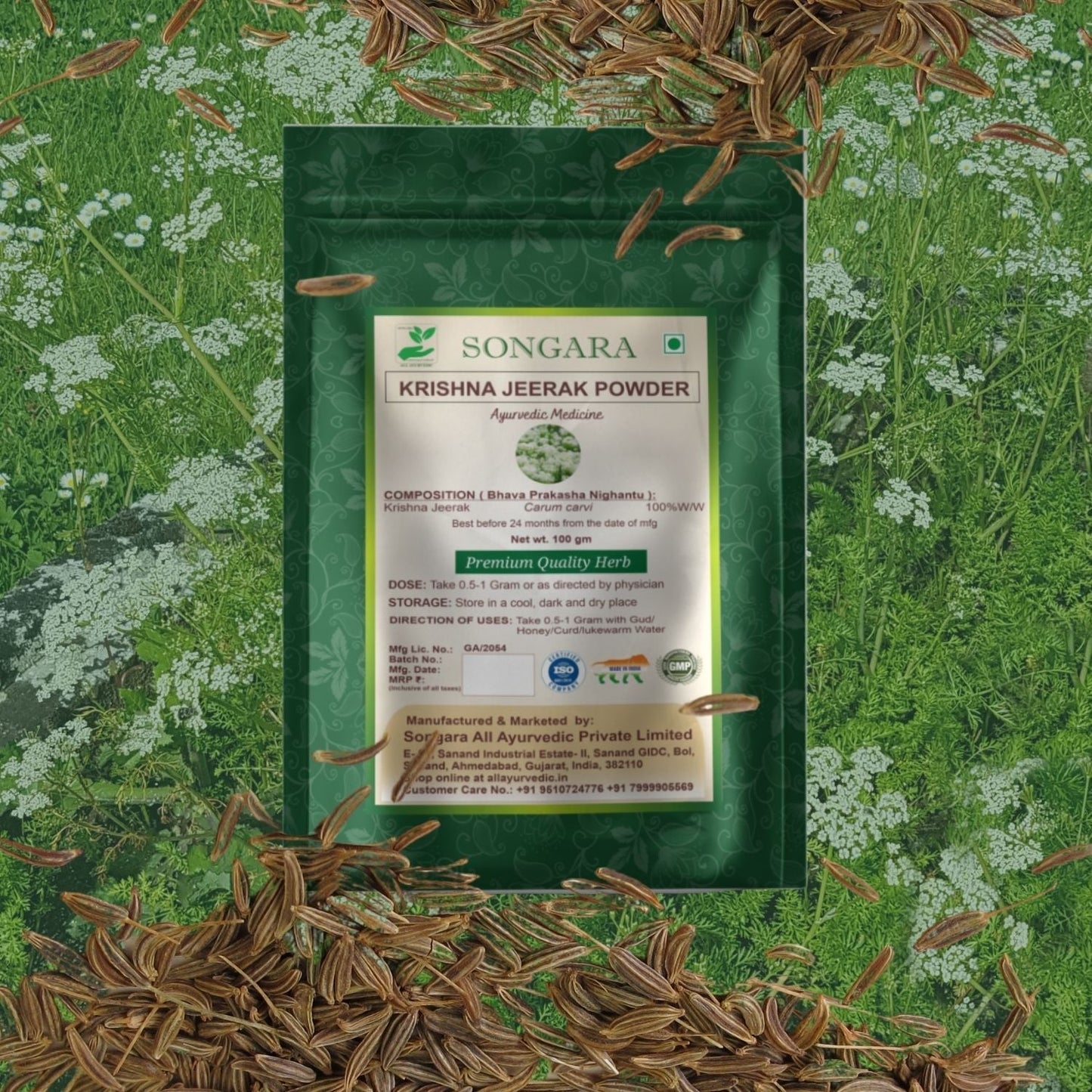
Songara Krishna Jeerak: (Carum carvi) Anti-Inflammatory, Skin Health, Respiratory Wellness, Digestive Support 100gm (1 Unit)
Songara Krishna Jeerak: (Carum carvi) Anti-Inflammatory, Skin Health, Respiratory Wellness, Digestive Support 100gm (1 Unit)
Couldn't load pickup availability
Kṛṣṇa Jīraka (कालाजाजी / Kalonji)
Botanical Name: Nigella sativa Linn.
Family: Ranunculaceae
English Name: Black Cumin / Nigella Seed / Small Fennel
1. Synonyms (पर्यायवाची नामानि)
In Ayurveda, Kṛṣṇa Jīraka is known by several synonyms mentioned in classical texts:
Sanskrit Synonyms:
उपकुञ्चा (Upakuncha), उपकुञ्ची (Upakunchi), कालिका (Kalikā), उपकालिका (Upakalika), सुषवी (Suṣavī), कुञ्चिका (Kunchikā), कुञ्ची (Kunchī), पृथ्वीका (Prithvīkā), स्थूलजीरक (Sthūlajīraka), कल्वञ्जिका (Kalvañjikā).
Etymological Meaning:
- Kṛṣṇa Jīraka literally means “black cumin” — Kṛṣṇa denoting its dark colour and Jīraka meaning a digestive spice.
- Prithvikā — “Born of earth,” suggesting its natural, grounding, and digestive properties.
- Kalvañjikā — derived from its blackish seeds and aromatic essence.
2. Regional Names (प्रादेशिक नामानि)
- Hindi: Kalonji, Kalavañji, Kalauñji, Mangarela, Mangaraila
- Bengali: Mota Kalajīre, Mota Kalajīra
- Marathi: Kalauñjī Jire, Kale Jire
- Gujarati: Kalauñji Jīrum
- Kannada: Kari Jīrige
- Telugu: Nallajīlakāra
- English: Black Cumin, Nigella Seed, Small Fennel
3. Botanical Description (वनस्पतिजन्य वर्णनम्)
Kṛṣṇa Jīraka (Nigella sativa Linn.) is an erect annual herb native to Syria and Lebanon but widely cultivated across India—especially in Assam, Bihar, Himachal Pradesh, and Punjab.
- Habit: Annual, erect, soft herb up to 45 cm tall.
- Leaves: 2–3 pinnately dissected, delicate, and finely divided giving a feathery appearance.
- Flowers: Small, white to blue or pale yellowish in colour.
- Fruits: Inflated capsules containing numerous angular, black seeds.
- Seeds: Triangular, rough-textured, black coloured, resembling sesame seeds; the inner pulp is white with a strong aromatic odour and pungent taste.
- Flowering & Fruiting: Flowers appear in autumn; fruits mature in winter.
4. Chemical Constituents (रासायनिक संघटनम्)
The seeds of Kṛṣṇa Jīraka contain several pharmacologically active constituents such as:
- Volatile Oils: Containing esters of unsaturated fatty acids (C-15 and higher terpenoids).
- Essential Compounds: Carvone, d-Limonene, p-Cymene, Nigellone.
- Alkaloids & Glycosides: Alkaloids, steroids, and hederagenin glycoside.
- Other Compounds: Aliphatic alcohols, α-β unsaturated hydroxy ketones, and fixed oils rich in linoleic and oleic acids.
These constituents impart Kṛṣṇa Jīraka its carminative, stimulant, antimicrobial, and antioxidant properties.
5. Properties and Therapeutic Uses (गुणधर्म एवं चिकित्सोपयोग)
Rasa (Taste): Tikta (Bitter), Kaṭu (Pungent)
Guna (Qualities): Laghu (Light), Rūkṣa (Dry)
Virya (Potency): Uṣṇa (Hot)
Vipāka (Post-digestive effect): Kaṭu
Doṣaghna Karma: Pacifies Kapha and Vāta, stimulates Pitta and Agni.
General Properties:
Kṛṣṇa Jīraka is aromatic, carminative, digestive (Deepanīya), stomachic (Pācana), and emmenagogue (Ārtavapravartinī). It enhances appetite, improves digestion, promotes uterine contractions, and purifies the body by promoting sweat and urination.
Therapeutic Uses:
- Postpartum Care: Given with root of Citraka to women after delivery to stimulate appetite, increase lactation, and promote uterine cleansing (Lochia expulsion).
- Menstrual Disorders: Beneficial in Dysmenorrhoea and Amenorrhoea due to its Uṣṇa and Ārtavapravartinī nature.
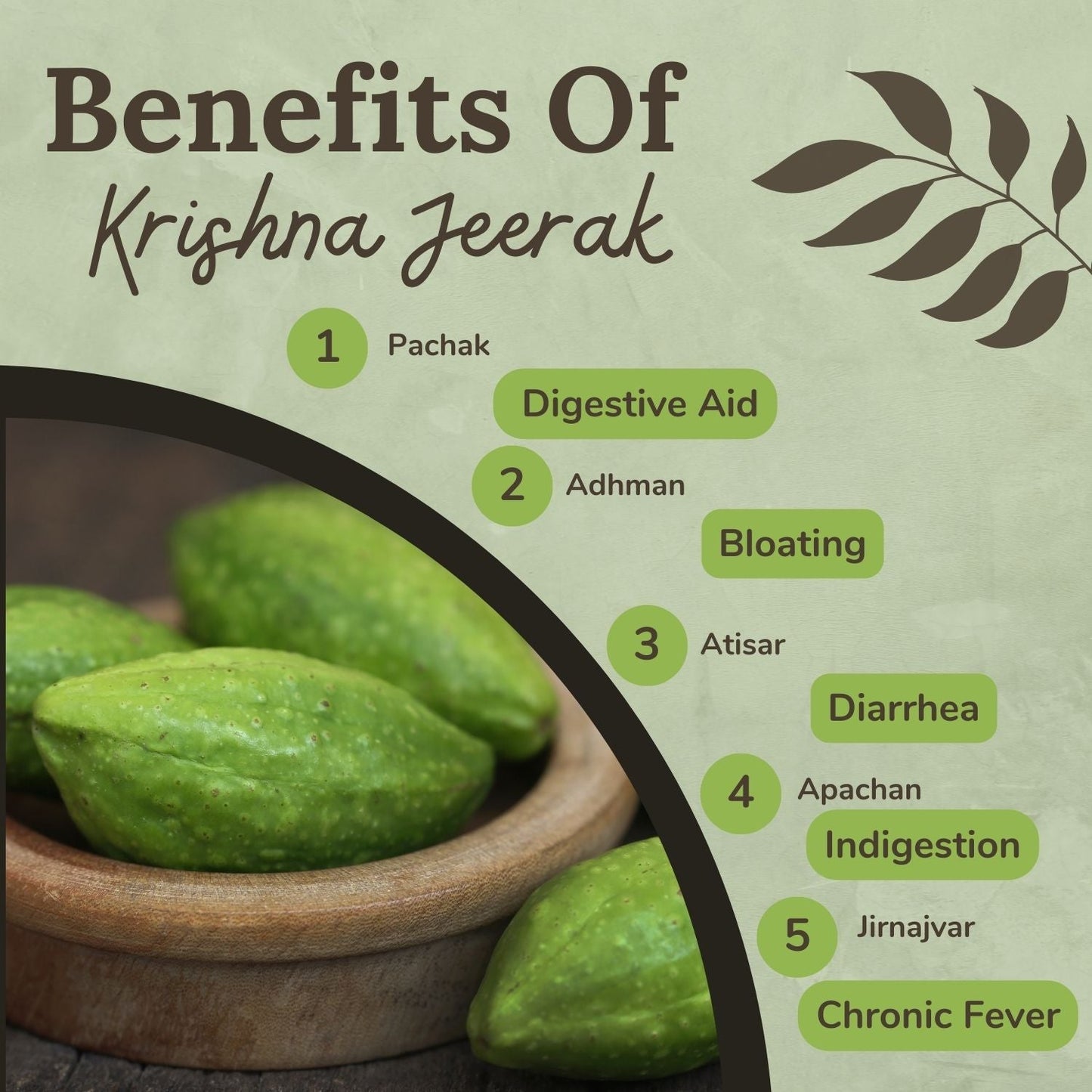
- Digestive Disorders: Useful in Ajeerna (indigestion), Adhmāna (flatulence), and Aruchi (loss of appetite). Administered with buttermilk to relieve hiccups and bloating.
- As a Carminative Adjunct: Combined with purgative drugs to prevent gripping and gastric discomfort.
- Skin Disorders: The oil of Kṛṣṇa Jīraka is used both internally and externally in chronic skin ailments like eczema, itching, and minor infections.
- Condiment & Antimicrobial Use: Seeds are used as spice and as a natural preservative. They prevent woollen clothes from moth damage when combined with camphor.
- General Health Tonic: Regular small use improves Agni (digestive fire), purifies the skin, and maintains healthy metabolism.
Precaution:
Not to be used during pregnancy, as it may stimulate uterine contractions and cause miscarriage in high doses.
6. Doses (मात्रा)
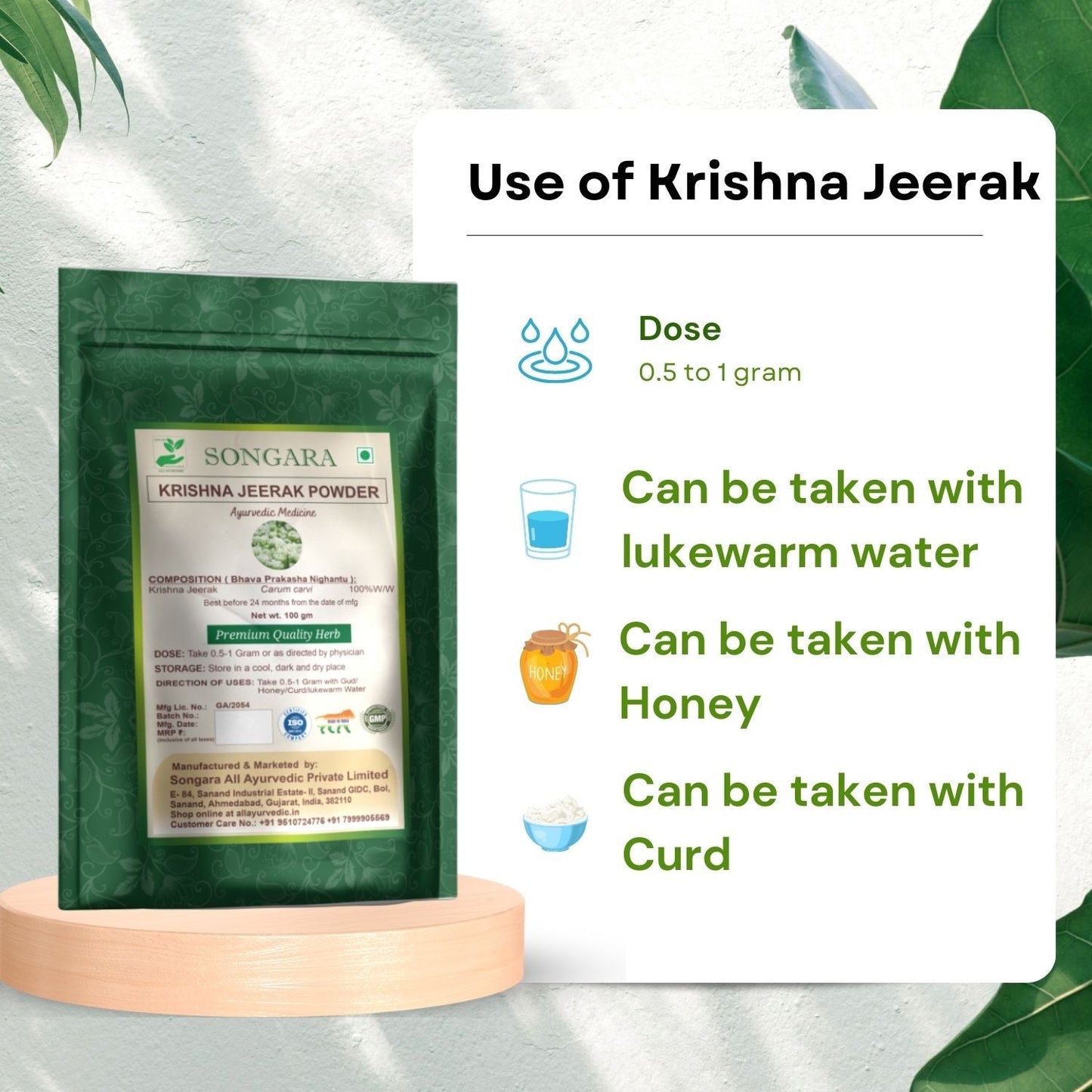
- Powder (Churna): ½ – 1 gram, once or twice a day with honey or buttermilk.
Summary:
Kṛṣṇa Jīraka or Kalonji (Nigella sativa Linn.) is a potent Ayurvedic spice and medicine described as Deepanīya, Pācanīya, and Ārtavapravartinī. It balances Kapha-Vāta, stimulates digestion, improves metabolism, promotes uterine health, and enhances postpartum recovery. Modern research validates its antioxidant, antimicrobial, and immunomodulatory activities
Ref: Bhavaprakash Nighantu
Materials
Materials
Shipping & Returns
Shipping & Returns
Dimensions
Dimensions
Care Instructions
Care Instructions
Share